Electronic Trip Logbook: better cost control and accounting-ready records
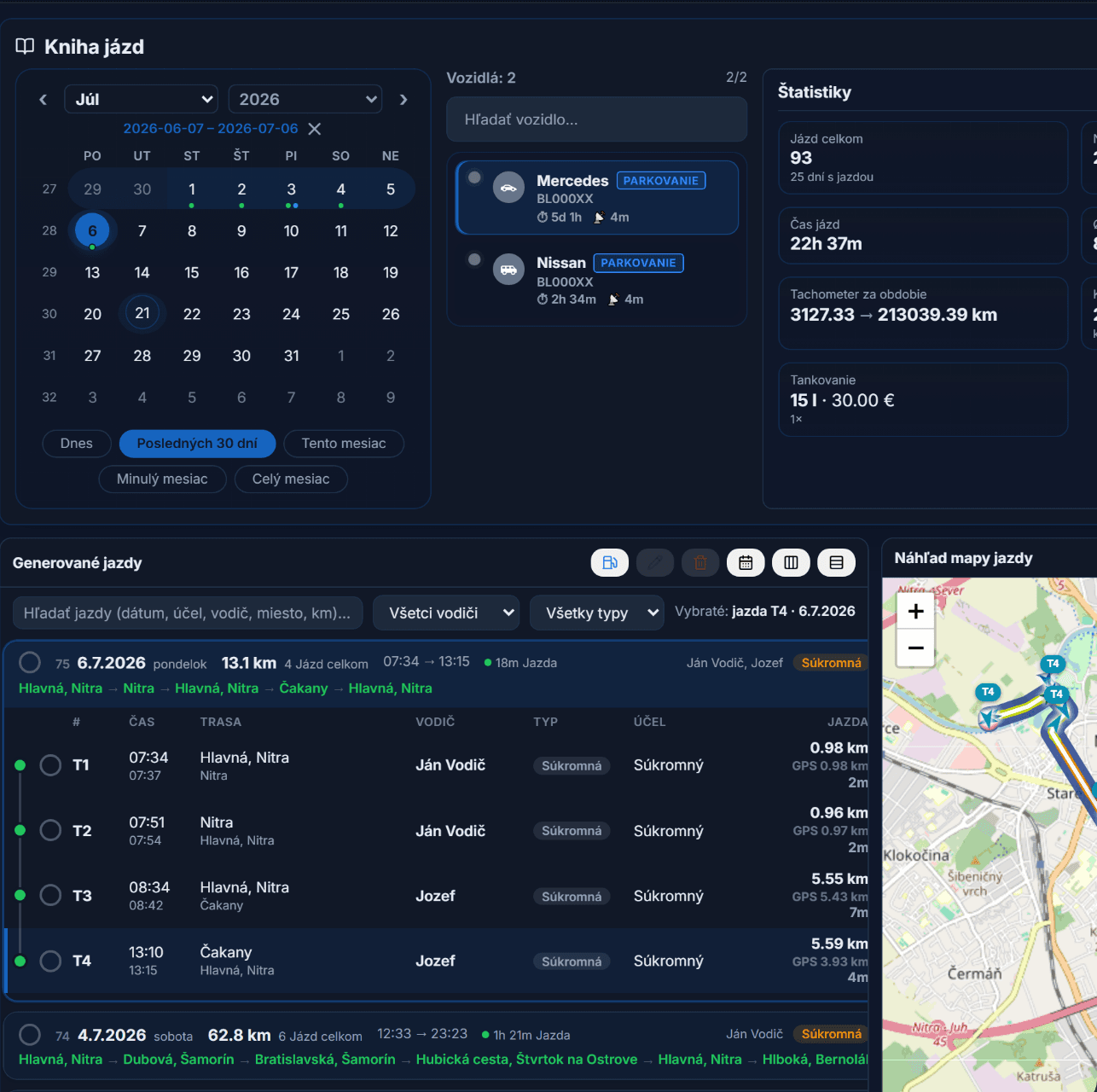
An electronic trip logbook is a practical standard for companies that need clear visibility of business routes, fuel usage, and vehicle utilization. Instead of manual notes, you get accurate data automatically, including time, route, distance, and trip purpose.
Legal context in Slovakia
For tax-deductible vehicle-related expenses, clear documentation is essential. In Slovak practice, companies commonly refer to Section 19 of Act No. 595/2003 Coll. on Income Tax (as amended), covering tax expenses. An electronic trip logbook helps build consistent records for accounting and internal controls.
100% VAT deduction instead of the flat 50%
From 1 January 2026, a passenger vehicle (categories M1, L1e, L3e) also used privately qualifies for only a flat 50% VAT deduction (Act No. 222/2004 Coll.) — and the same 50% cap applies to fuel, service, tyres and maintenance. If a trip logbook proves exclusive business use, you can claim the full 100% VAT deduction. Income tax works similarly: without records you deduct a flat 80% of expenses (Section 19 of Act No. 595/2003 Coll.), with a logbook up to 100%. The electronic logbook creates credible evidence of the purpose and scope of each trip for any tax audit.
What you gain
- Automatic trip start/end records without manual entry.
- Business vs private trip separation for cleaner reporting.
- Exportable outputs for accounting and internal audits.
- Accurate data on mileage, fuel consumption, and route frequency.
- Better cost control across your fleet.
Want to deploy it without complexity?
We will configure a solution that combines trip logbook and tracking in one platform.
Note: this article is informational only and does not replace legal or tax advice.